

Reveal Your Perfect Shade: A Simple Guide to Hair colour Theory
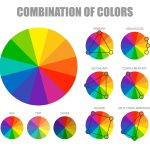
Colour theory is the scientific study of how colours interact together. It is important for hair colouring since it describes how different tones combine to achieve specific effects. A colour wheel allows stylists to quickly identify complementary hues and select the best dye combinations to achieve the desired tone. The following are essential elements of hair colour theory:
Hue
The specific colour family or variant is Hue. Each hue is created by combining primary colours in varying ratios. When equal proportions of red, blue, and yellow are blended together, natural hues ranging from dark to light emerge.
The tone of a colour is determined by its position on the colour wheel. The cool tones (blue, green, and violet) are on the left, while the warm tones (red, yellow, and orange) are on the right. Tones can also be neutral. Neutral tones are created by blending cool and warm pigments.

Level
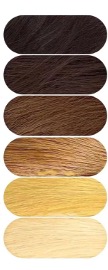
Level describes how light or dark a hue is. It is the result of mixing several hues. Of the fundamental hues, yellow is the lightest and blue the darkest.
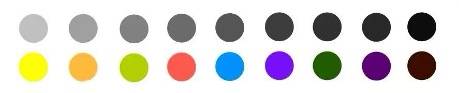
Levels are divided into 10 categories:
- Level 1: Darkest Black
- Level 2: Black
- Level 3: Dark Brown
- Level 4: Dark Brown
- Level 5: Medium Brown
- Level 6: Medium Light Brown
- Level 7: Light Brown
- Level 8: Dark Blonde
- Level 9: Medium Blonde
- Level 10: Light Blonde
Intensity
Intensity refers to the colour’s saturation. Natural hair colour is determined by melanin pigments (pheomelanin for red and yellow tones and eumelanin for black and brown tones). Brown or black hair contains a lot of eumelanin, while red hair contains a lot of pheomelanin. White hair has little to no pigment, whereas light blond hair contains more keratin and less melanin.
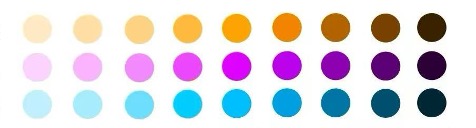
Intensity can be quantified using a scale ranging from 1 to 10. A larger number indicates a darker, more saturated hue, and a lower number indicates a lighter, more muted tint.
Complementary colours
On the colour wheel, blue and orange, purple and yellow, and red and green are all diametrically opposed. When complementary colours are combined, neutral tones such as gray or brown are created. When used together, they provide a strong contrast that can be eye-catching, such as when choosing eye or hair highlights. Combining complementary colours can help you eliminate unwanted tones and generate natural hues like brown or gray.
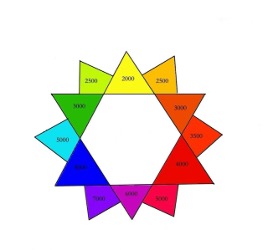
Understanding hair colour theory allows you to more properly choose and change hair tones. The colour wheel depicts how hues interact to balance warm or cool undertones, predict reactions to lighting, and produce attractive tones. Being knowledgeable about hue, level, strength, and complementary colours will help you select the best shade for your purposes.